
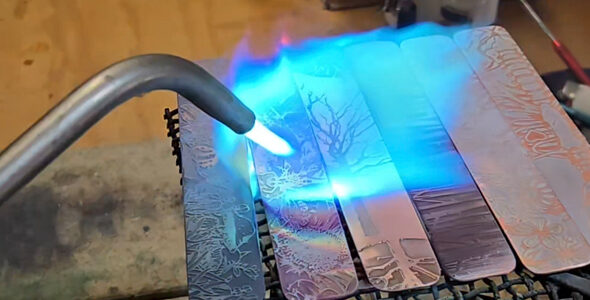
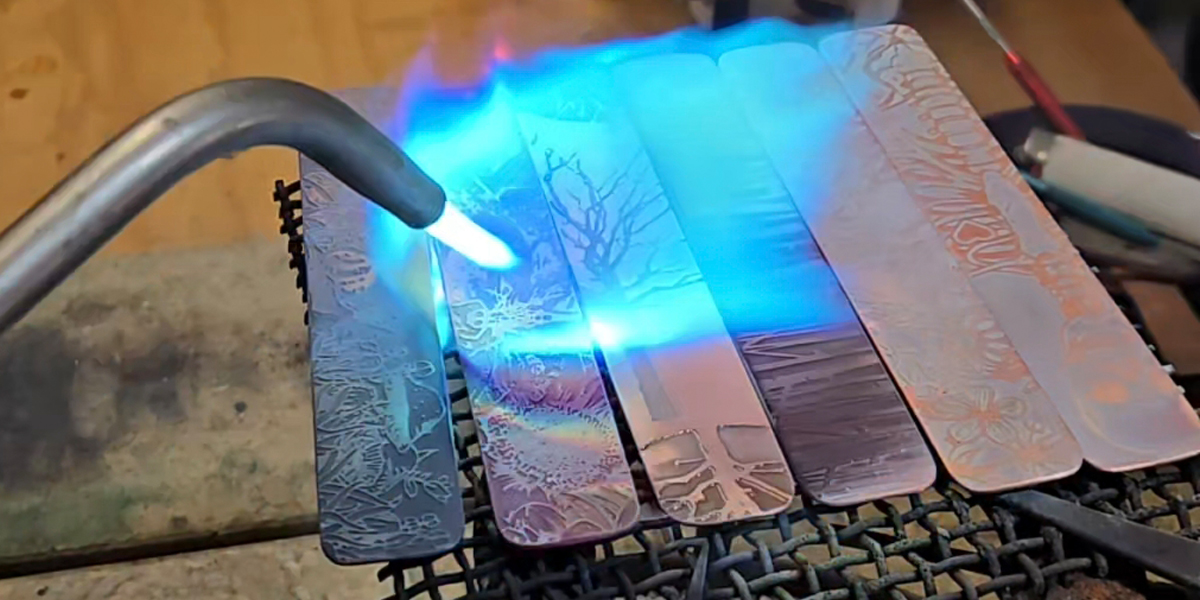
If you’ve ever worked with metal or been curious about the process of transforming raw materials into beautiful jewelry, you may have come across acetylene gas. This fascinating compound plays a crucial role in the world of metalsmithing. In this post, we’ll dive into the history of acetylene, some interesting facts, and how it’s used in metalsmithing, specifically for annealing.
If you’re newer to annealing or want to check what tools I use at my bench, I wrote a separate post that walks through the essential tools needed for annealing if you want to take a look.
The History of Acetylene Gas
Acetylene gas was discovered in 1836 by Edmund Davy, a British chemist who was initially investigating the properties of potassium carbide. However, it wasn’t until 1892 that French chemist Henri Moissan produced acetylene by reacting calcium carbide with water. This process quickly became the commercial method of acetylene production, leading to its widespread use in various industries.
By the early 20th century, acetylene was primarily used for lighting, particularly in streetlamps, miners’ lamps, and even early automobile headlights. Its bright, white light made it a popular choice before electricity became widespread. Over time, acetylene gas found new uses, especially in welding, cutting, and metalsmithing, as its high flame temperature made it a perfect tool for working with metals.
Interesting Facts About Acetylene
- High Temperature: Acetylene gas burns at an extremely high temperature. When mixed with oxygen, it can reach temperatures of around 5,700°F (3,150°C). This intense heat makes it ideal for welding and cutting metals.
- Instability: Acetylene is an unstable gas and must be handled with care. If stored under high pressure without stabilizing agents, it can decompose explosively. This is why acetylene cylinders are filled with a porous material and acetone, which help stabilize the gas.
- Versatility: While acetylene is primarily known for its role in welding and cutting, it’s also used in the chemical industry to synthesize various organic compounds, including plastics and pharmaceuticals.
Acetylene in Metalsmithing: The Annealing Process
In metalsmithing, acetylene is a go-to gas for annealing, a process that involves heating metal to soften it. When metal is worked, whether by hammering, bending, or shaping, it becomes hardened and brittle. Annealing helps to relax the internal stresses, making the metal more pliable and easier to manipulate without breaking.
Why Acetylene for Annealing?
The high flame temperature of acetylene is perfect for annealing metals like copper, silver, and brass. These metals need to be heated to specific temperatures in order to become malleable. Acetylene’s ability to produce a consistent, concentrated flame allows metalsmiths to quickly and evenly heat the metal, reducing the risk of uneven softening or overheating.
Additionally, because acetylene burns cleanly, it leaves fewer impurities on the metal, making it easier to clean and finish afterward. For those working with intricate designs or delicate metal pieces, acetylene offers the control needed to bring their creations to life.
Steps for Annealing with Acetylene:
- Prepare the Metal: Before heating, the metal piece is cleaned to remove any oils, dirt, or residue that could interfere with the annealing process.
- Heat the Metal: Using a torch, the metal is evenly heated with the acetylene flame until it reaches a dull red color, indicating it has softened.
- Cool the Metal: Once the metal reaches the right temperature, it’s quenched in water to cool it rapidly. Afterward, it can be worked further or shaped to the desired design.
Curious about the tools I use for annealing jewelry? See the full list on my blog.
Acetylene’s Role in Jewelry Making
Beyond annealing, acetylene is also used for soldering and brazing in jewelry making. Its ability to produce a precise, high-heat flame is essential for joining small, intricate parts together without damaging the surrounding metal. Whether crafting rings, bracelets, or earrings, acetylene is often a metalsmith’s best tool for adding fine details and connecting components seamlessly.
Acetylene gas may seem like just another tool, but its history and versatility make it an invaluable resource in the world of metalsmithing. Whether you’re softening metal for shaping or connecting delicate pieces in jewelry, acetylene helps artisans bring their visions to life, one flame at a time.