
When most people think of copper, they imagine small, shiny nuggets tucked into rock. But some copper is far from ordinary. Near Lake Superior, a 19-ton slab known as the Lake Copper was discovered, one of the largest native copper pieces ever recovered. Even more astonishing, deep underground in Michigan, a single mass of copper at the Minesota (with only one n) Mine weighed 527 tons. These massive formations are still buried, hidden from view, and impossible to see in their entirety.
The Birth of Giants
These enormous copper formations are the result of a process billions of years in the making. Molten rock once forced its way into cracks in the Earth, slowly cooling into veins of pure copper. Some veins broke free, carried by glaciers, and became the float copper scattered across the landscape. Others stayed in place, growing to astonishing sizes under perfect geological conditions. Each mass is a frozen chapter of the Earth’s deep history.
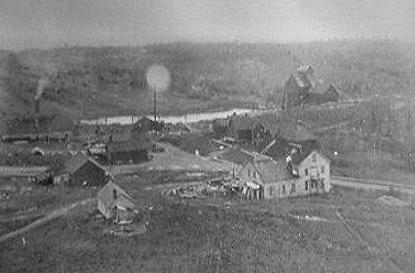
Photo credit: MiningArtifacts.org – Michigan Copper Mines
Discovering the Minesota Mine
The Minesota fissure vein was first uncovered in 1847. Prospectors found a six-ton chunk of native copper in a pit originally dug by Indigenous miners. Inside the pit, a hemlock tree had grown for nearly 400 years, silently marking the passage of centuries. Mining began in 1848, and by 1855, the Minesota Mine was one of the most productive copper operations in the United States. Ten shafts were dug, with the deepest extending 1,200 feet.
In 1856, miners tunneled into a 527-ton copper mass, the second-largest ever found in the Copper Country. While massive chunks were collected by hand, a small stamp mill processed lower-grade ore, recovering copper from ore with just three percent content.
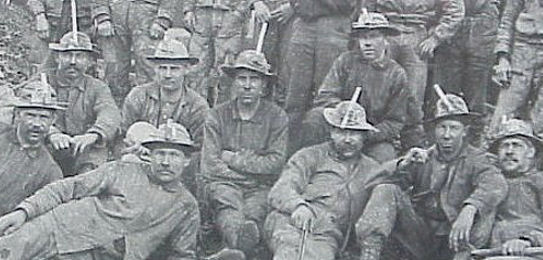
Photo credit: MiningArtifacts.org – Michigan Copper Mines
Rise and Fall
By 1870, the richest veins had been mined out, and the shafts had reached the limits of the hoisting equipment. At the same time, copper prices had fallen sharply from 55 cents to 19 cents per pound. Rather than invest in new equipment, the company handed the mine over to tributers, independent miners who paid a share of the copper they extracted. That year, tributers removed 270 tons of copper.
Through the late 1800s, tributers continued to work areas above the water level, eventually producing 17,352 tons of copper and 533 pounds of silver. In 1899, the Michigan Copper Mining Company acquired the Minesota Mine, along with the nearby Rockland and Superior mines. New shafts, including A, B, C, and E, opened, and lodes such as Calico, Evergreen, and Ogima were mined. The mine ceased commercial operations in 1910, though tributers continued until 1913. In 1923, the Michigan Copper Mining Company became part of the Mohawk Mining Company.
Why It Matters
Walking among the surface remnants of the Minesota Mine today—shafts, tailings piles, and old structures—offers a tangible link to a time when massive copper giants lay hidden underground. From float copper shaped by glaciers to colossal underground masses, these formations tell a story of the Earth’s immense power and the determination of miners who worked to uncover it.
Fun Facts
- Float copper refers to pieces transported and shaped by glaciers. The 19-ton Lake Copper is one of the largest native copper formations ever recovered from Lake Superior.
- Underground copper masses, such as the 527-ton piece from the Minesota Mine, grew in place rather than moving like float copper.
- Copper’s natural forms can range from tiny nuggets to slabs heavier than most vehicles. This shows the immense power of geological processes.
Sources:
– MiningArtifacts.org, Michigan Copper Mines
– Michigan Geological Survey: Historical Copper Mines Reports