Jeweler’s saw blades are one of those things that seem simple until you actually have to choose them. The numbering feels backward, there are a lot of options, and it’s not always clear why you’d reach for one size over another. This post is meant to break it down in a straightforward way, without overcomplicating it.
How blade sizing works
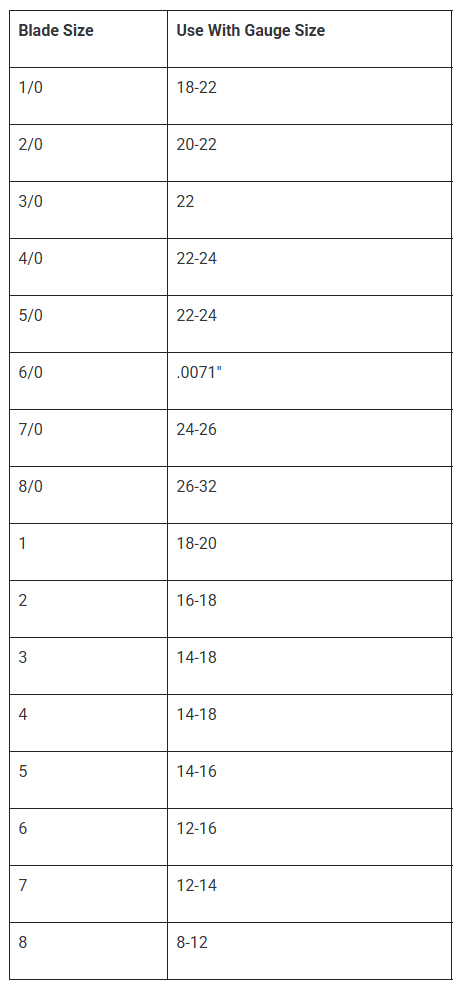
Jeweler’s saw blades are numbered from very fine to very coarse. The part that trips people up is that the sizes with zeros are finer, and the sizes without zeros get progressively coarser.
The range usually looks like this:
- Very fine: 8/0 down to 1/0
- Medium: 1, 2, 3
- Coarse: 4, 5, 6
More zeros means a thinner blade with more teeth per inch. Fewer zeros, or whole numbers, mean a thicker blade with fewer, larger teeth.
What the different sizes are good for
Finer blades are best for thin sheet metal and detailed cuts. They handle tight curves well, but they’re delicate and break more easily. These are the blades you reach for when precision matters more than speed.
Medium blades are the most versatile. They’re strong enough to handle everyday cutting but still give you control for curves and organic shapes. For most jewelry work, this range does the bulk of the job.
Coarser blades are designed for thicker metal. They cut faster and feel sturdy, but they don’t like tight turns and they leave a rougher edge behind. These are better for heavier gauge metals or more open designs.
A practical rule of thumb
A good guideline is to make sure there are always at least two to three teeth touching the metal as you cut. If the blade feels like it’s catching, grabbing, or breaking constantly, it’s often a sign that the blade is too coarse for that thickness of metal.
Commonly used sizes
While every jeweler has preferences, a few sizes tend to get used over and over:
- 3/0 is a solid all-around blade for many types of sheet metal and curved designs
- 2/0 offers a little more strength for thicker material
- Size 1 is useful for heavier stock and straighter cuts
These sizes cover a lot of ground and make it easy to switch based on the metal you’re working with rather than forcing one blade to do everything.
The bigger picture
Choosing the right blade size isn’t about rules, it’s about making the cut feel smoother and more controlled. When the blade matches the metal, sawing feels steady instead of frustrating.
Over time, you’ll naturally reach for certain sizes depending on the gauge, the design, and how tight the curves are. Understanding what the numbers mean just makes that decision easier and keeps the focus on the work itself, not fighting the tools.
If you want to see the tools I reach for most at my bench when sawing, check out my guide to my favorite bench tools for sawing.